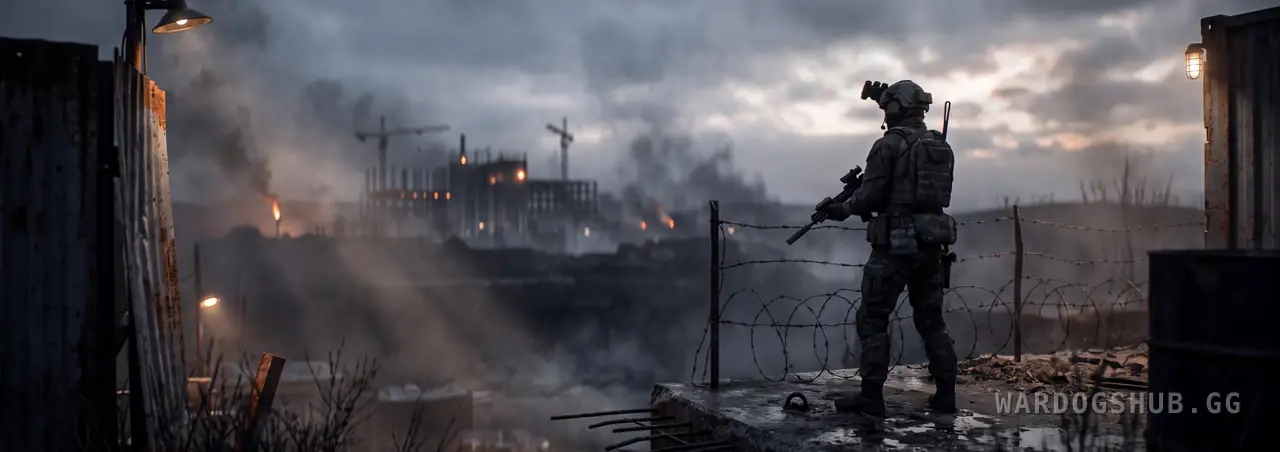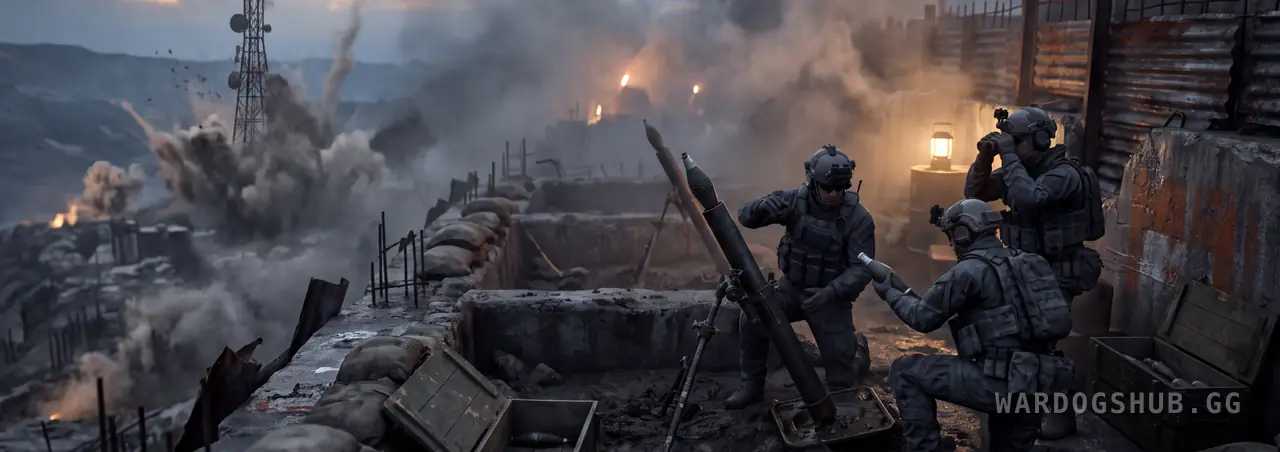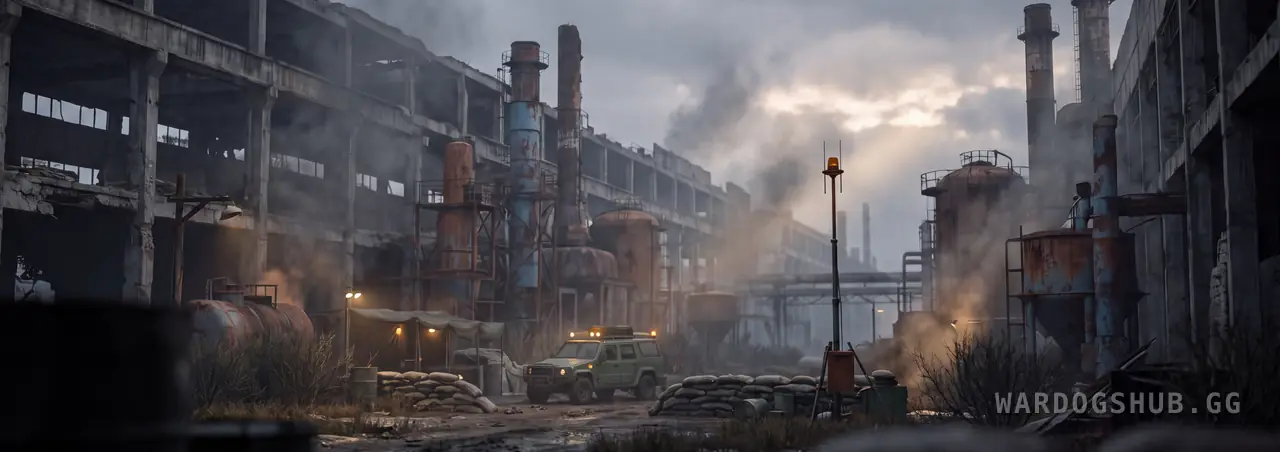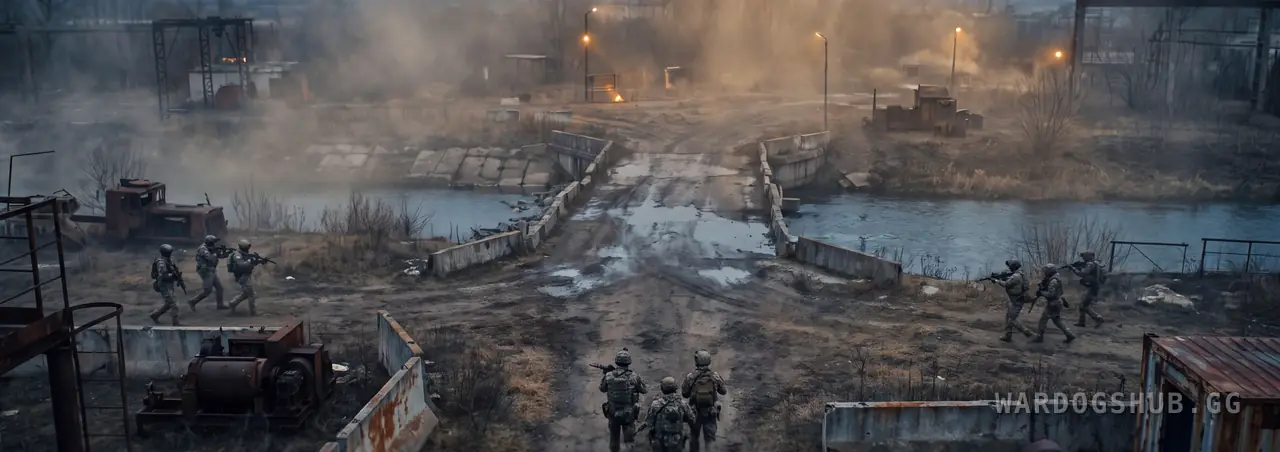
WARDOGS has been described as the next Battlefield, the next Squad, and a Hell Let Loose successor — sometimes in the same article. That is what happens when a studio announces a 100-player military shooter and nobody has played it yet.
Two confirmed design decisions make it genuinely different from all three. Neither is about scale.
Everyone else has two teams
This is the change that matters most, and it is easy to skim past.
Battlefield, Squad and Hell Let Loose all put two sides on a map. That produces a front line. It moves, it breaks, it re-forms, but at any moment there is a direction called forward and a direction called back, and everyone on your side agrees which is which.
WARDOGS puts three teams on the map, contesting one objective. A front line cannot form, because committing your strength against one opponent exposes you to the other. The team that is winning is permanently the team the other two have a reason to shoot.
Three-way conflict is a structural fix for the problem that ruins large-scale shooters: the snowball. In a two-team match, the side that takes the objective first tends to hold it, because holding is easier than taking. With a third party, every attempt to consolidate is an invitation.
The map is mostly not the battlefield
The full map is 256 km². The Control Zone is 2 × 2 km — four square kilometres, or one sixty-fourth of it, randomised each match.
That ratio is doing something deliberate. Squad and Hell Let Loose put you on a map roughly the size of the fight. WARDOGS gives you a small fight inside an enormous space, which turns getting there into its own problem. A helicopter that puts four people on the correct side of the zone has contributed more than a good aim duel.
It also means map knowledge works differently. You cannot memorise the good angles on the objective, because the objective was somewhere else last match.
No classes, just a budget
Hell Let Loose and Squad both use strict role systems. Somebody claims medic, somebody claims anti-tank, and the number of each is capped. That scarcity is deliberate — it is what makes a squad feel like a unit rather than six individuals.
WARDOGS has no fixed classes at all. You buy your kit from a persistent cash balance: weapon, equipment, vehicle. What you bought is your role for that life. Die, and you get the full budget again with no obligation to make the same choice.
The interesting consequence is not the freedom. It is the cost. In Battlefield, picking the best rifle is free — everyone has it. In WARDOGS, the best rifle has a price, and the money it consumes is money not spent on armour, utility, or a way to reach the objective. A weapon that is 90% as good for half the price is frequently the correct choice.
That makes "best weapon" close to meaningless as a question, and "best weapon per dollar" the real one. We have written about what that does to the meta separately.
Cash rewards the things scoreboards usually ignore
Here is the part most likely to decide whether the whole design holds together.
Bulkhead has tied income to teamplay — reviving people, transporting allies, holding objectives — rather than to kills. Because cash directly determines what you can field next life, a pilot who never fires a shot but keeps putting squads on the zone is, by the game's own accounting, playing well and getting materially rewarded for it.
Squad and Hell Let Loose achieve similar behaviour through social pressure and role scarcity. WARDOGS is attempting it through economics, which is a genuinely different lever.
Whether it survives contact with a live playerbase is the open question. Economies that reward support roles on paper have a habit of collapsing into everyone buying the best gun and hoping somebody else drives. That is exactly the kind of thing a three-day alpha is for.
So which one is it like?
| Teams | Roles | What decides your loadout | |
|---|---|---|---|
| WARDOGS | 3 | None | What you can afford this life |
| Battlefield | 2 | Loose classes | Unlocks and progression |
| Squad | 2 | Capped roles | What your squad still needs |
| Hell Let Loose | 2 | Capped roles | What your squad still needs |
Structurally it sits nearest Squad and Arma — large map, combined arms, proximity voice, teamplay weighted above kills. The rhythm of respawning and re-buying is closer to an arcade shooter.
The honest answer is that the third team makes the comparison difficult on purpose. Nothing in the list above has to solve the problem of being winning-and-therefore-a-target.